
A Quiet Reminder of Functional Safety
24 Jun 2026
How Autonomous Robots are Safely Operating in Everyday Public Spaces
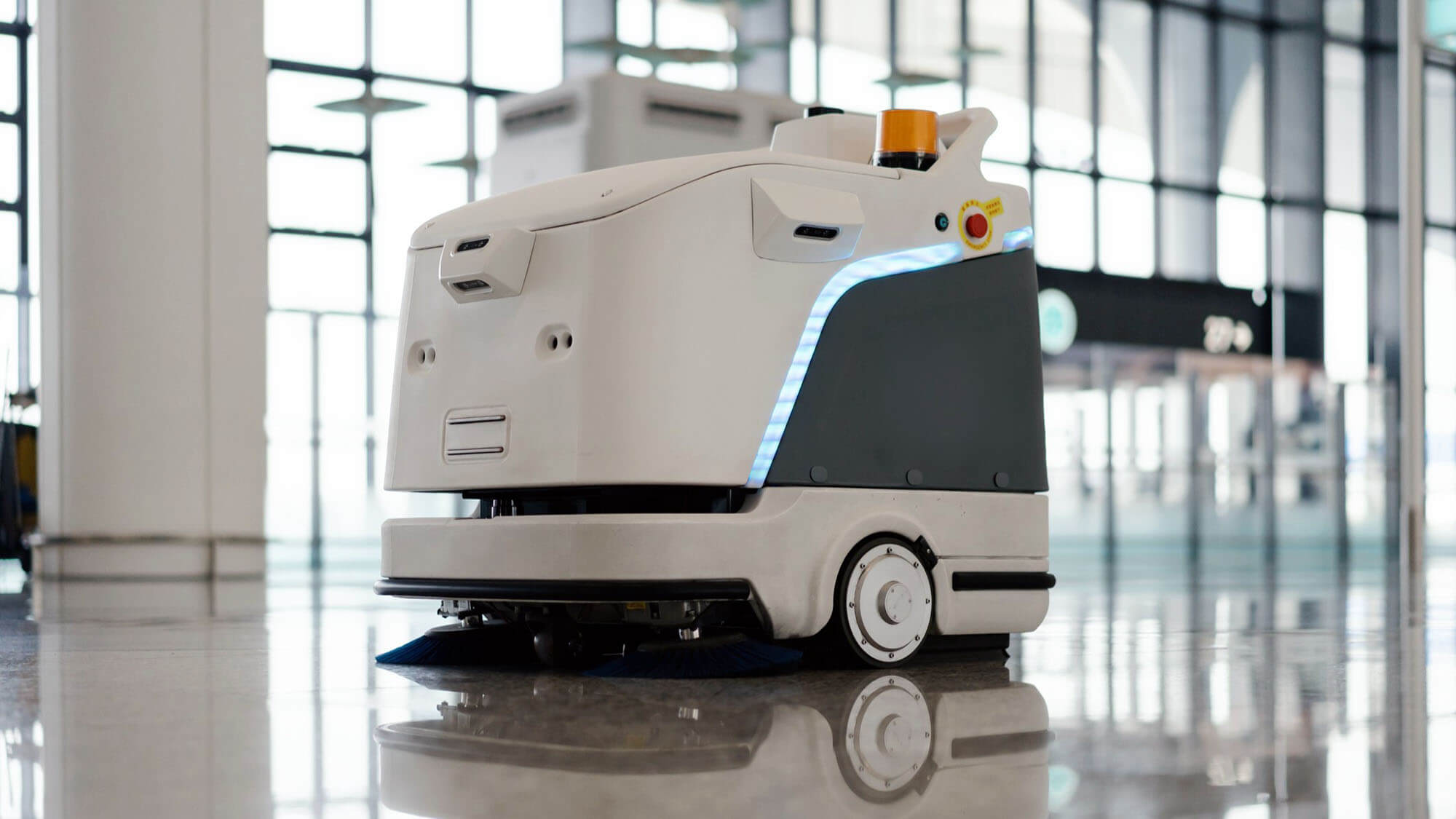
Coming back from a family vacation through Zurich Airport, I had one of those moments where work and everyday life quietly overlap. In between juggling luggage, and navigating the usual airport chaos, I spotted an autonomous floor-cleaning robot moving through the terminal. No barriers. No warnings. Just operating among people.
And it struck me. In that moment – surrounded by fellow travelers and all the unpredictability that comes with a busy airport, it became clear just how embedded functional safety has become in everyday life. Not behind guarded fences or inside controlled industrial environments – but out in the open, operating quietly in the spaces we move through every day.
What’s most interesting is that this isn’t cutting-edge anymore. These systems are already deployed at scale, operating in public infrastructure, and trusted without a second thought.
Functional Safety Has Left the Factory Floor
We often think of functional safety in the context of industrial environments – machinery, safety programmable logic controllers (PLCs), and guarded cells where hazards are controlled through physical separation.
But the robot in the airport is operating in a completely different world. It’s out in the open, in a public space, surrounded by untrained users and constantly changing conditions. Airports are about as uncontrolled as it gets – children moving unpredictably, people distracted by phones, luggage and trolleys everywhere.
And yet, this machine is trusted to operate safely in that environment. That represents a significant shift in how functional safety is being applied – moving beyond controlled industrial settings and into everyday public space
The Reality: Safety Is Already Embedded in Everyday Life
What stood out most wasn’t the technology – it was how normal it felt. No one stopped to look. No one questioned it. No one seemed concerned. Because, subconsciously, we now expect systems like this to be safe.
That expectation is built on fundamental functional safety principles. The robot must avoid people, behave predictably, respond safely when something goes wrong and importantly it must not introduce new hazards.
Even if passengers have never heard of functional safety, safety integrity levels (SIL) or performance levels (PL), they are still relying on those principles every time they walk past.
What Safety Is Actually Happening?
From a functional safety perspective, systems like this are doing a lot more than meets the eye.
They are continuously monitoring their surroundings using a combination of sensors – typically LiDAR, cameras, or ultrasonics – allowing them to detect and navigate around people and obstacles in real time. Their behaviour adapts dynamically, slowing down as they approach people and maintaining safe separation distances.
There is also always a means to bring the system to a safe stop. On the robot in question, there were several, easily identifiable emergency stop functions. The safety systems must also be capable of halting hazardous motion immediately if something abnormal occurs – i.e., internal faults.
Crucially, if things go wrong – whether it’s a loss of localisation, a sensor issue, or a software fault, the system is expected to transition to a safe state. In most cases, that simply means stopping, and staying stopped until it is safe to resume.
The Standards Question (Without Getting Too Deep…)
Behind the scenes, systems like this are typically supported by a combination of established standards; ISO 12100 for risk assessment, ISO 13849 or IEC 62061 for control system safety, and the broader framework of IEC 61508. For mobile platforms, ISO 3691-4 often comes into play, and where advanced perception is involved, guidance like ISO/IEC TR 5469 may also be relevant.
Final Thoughts
As functional safety professionals, we spend a lot of time focused on SIL/PL targets, calculations, and architectural constraints.
But moments like this are a useful reminder of the bigger picture. The goal is compliance for reliable safety in the real world. And increasingly, that “real world” isn’t behind a safety fence. It’s right there in the airport terminal – moving around your family while you’re just trying to get home.
How Intertek Can Help
As autonomous systems continue to move into public and uncontrolled environments, the expectations on safety are only increasing. Demonstrating that these systems are safe is no longer just a technical exercise – it’s becoming a fundamental requirement for market access, trust, and adoption.
At Intertek, we support manufacturers and developers in navigating this shift.
Our approach combines practical engineering experience with a strong understanding of the applicable standards and regulatory frameworks. This includes early-stage hazard identification and risk assessment aligned with ISO 12100, through to the design and validation of safety-related control systems in accordance with ISO 13849, IEC 62061, and IEC 61508.
For autonomous and mobile platforms, we also support the application of standards such as ISO 3691-4, alongside emerging guidance where advanced perception or AI is involved.

You may be interested in...
Functional Safety Testing & Certification
From early design stages through to production, our modular FS solutions provide flexible options for manufacturers, and our FS Mark provides stakeholders with visibility for products they purchase, install, or utilize in operations.