Global testing and certification for Electric Vehicle Supply Equipment (EVSE) from portable cord sets through megawatt charging systems, including wireless systems, cables, and couplers.
Electric Vehicle Supply Equipment (EVSE) must meet the highest safety, performance, and compliance standards before reaching customers. As a Nationally Recognized Testing Laboratory (NRTL) and an IECEE CB-Scheme National Certification Body (NCB) with ISO 17025 accredited facilities and CB Scheme Test Laboratories (CBTL) in North America, Europe, and Asia, Intertek provides end-to-end testing and certification services for OEMs and EVSE manufacturers.
From Portable Chargers, AC home and public chargers, DC Fast chargers, wireless EVSE, and even Megawatt Charging Systems (MCS), Intertek’s global network helps manufacturers achieve certification with precision, pace and passion.
Comprehensive Electric Vehicle Supply Equipment (EVSE) Capabilities
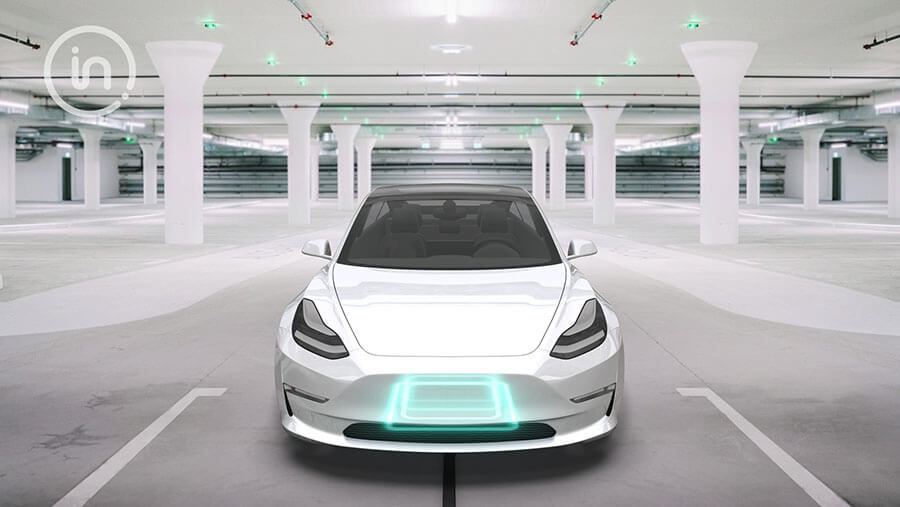
Wireless EV Charger Considerations
- Portable EVSE: Level 1 Cord Sets/ Mode 2 In Cable Control and Protection Device (IC-CPD) – Household outlets, portable chargers, and cable assemblies, tested to UL 2594/ IEC 62752
- AC EVSE: Level 2 Charge Station/ Mode 3 Wallbox – Residential and commercial charging stations tested to UL 2594 / IEC 61851.
- DC Fast Charging: Level 3 DC/ Mode 4 DC – High-power chargers directly providing DC Battery voltage, tested to UL 2202 / IEC 61851-23.
- Wireless EVSE – Certification for inductive and emerging contactless charging technologies, tested to UL 2750/ IEC 61980
- Megawatt Charging Systems (MCS <4.5MW) – Future-ready solutions for heavy-duty trucks, buses, and fleet electrification. Connector systems tested to UL 2278/ IEC 61851-23-3
Standards and Regulatory Expertise for Electric Vehicle Supply Equipment (EVSE)
Intertek evaluates EV supply equipment to the latest global requirements, including:
| Standard | Title / Scope | Definition |
| IEC 61851-1 | Electric Vehicle Conductive Charging System – General Requirements | Defines the general safety, performance, and operational requirements for conductive EV charging systems, including AC and DC charging. |
| IEC 61851-23 | DC Electric Vehicle Supply Equipment | Specifies requirements for DC fast charging equipment, including safety, construction, and performance criteria. |
| IEC 61851-21-1 | On-Board Charger EMC Requirements | Establishes electromagnetic compatibility (EMC) requirements for EV on-board chargers connected to AC/DC supplies. |
| IEC 61851-21-2 | Off-Board Charger EMC Requirements | Defines EMC requirements for external (off-board) EV charging systems to ensure reliable and interference-free operation. |
| IEC 61851-23-3 | Megawatt Charging Systems | Covers requirements for high-power DC EVSE designed for megawatt-level charging applications. |
| IEC 61851-24 | DC Charging Communication | Specifies digital communication protocols between EVs and DC charging stations for control and monitoring. |
| IEC 61851-25 | Electrical Separation Protection | Defines requirements for DC EVSE systems where safety protection relies on electrical isolation. |
| IEC 62752 | In-Cable Control and Protection Device (IC-CPD) | Covers safety and performance requirements for portable in-cable protection devices used in Mode 2 EV charging. |
| IEC 62196-1 | EV Connectors – General Requirements | Establishes general requirements for plugs, socket-outlets, and connectors used in EV conductive charging. |
| IEC 62196-2 | AC Connector Compatibility | Defines dimensional and interoperability requirements for AC charging connectors and interfaces. |
| IEC 62196-3 | DC and AC/DC Couplers | Specifies dimensional compatibility requirements for DC and combined AC/DC charging connectors. |
| IEC TS 62196-3-1 | Thermally Managed DC Connectors | Addresses requirements for DC charging connectors incorporating thermal management systems. |
| IEC 61980-1 | Wireless Power Transfer – General | Defines general requirements for wireless EV charging systems, including safety and interoperability. |
| IEC 61980-2 | Wireless Communication Requirements | Specifies communication and operational requirements for magnetic field wireless charging systems. |
| IEC 61980-3 | Magnetic Field Wireless Charging | Covers technical requirements for magnetic field-based wireless power transfer systems for EVs. |
| IEC 62909-1 | Bi-Directional Power Converters – General | Defines safety and performance requirements for grid-connected bidirectional power converters used in EV infrastructure. |
| IEC 62909-2 | Converter Interface Requirements | Specifies interface requirements between converters and distributed energy resources. |
| IEC 62955 | Residual Direct Current Detecting Device | Establishes requirements for RDC-DD devices used to detect DC leakage currents in EV charging systems. |
| UL 2202 | DC Charging Equipment for EVs | Defines safety requirements for DC EV charging equipment in North America. |
| UL 2594 | AC Electric Vehicle Supply Equipment | Covers safety requirements for AC EV charging systems, including Level 1 and Level 2 chargers. |
| UL 2251 | EV Plugs, Receptacles, and Couplers | Specifies safety and construction requirements for EV connectors and couplers. |
| UL 2278 | Megawatt Charging Couplers | Covers high-power EV connector systems designed for megawatt charging applications. |
| UL 2231-1 | Personnel Protection Systems (General) | Defines general safety requirements for personnel protection systems in EV supply circuits. |
| UL 2231-2 | Personnel Protection Systems (Specific) | Specifies additional requirements for protective devices used in EV charging systems. |
| UL 2750 | Wireless Power Transfer Equipment | Defines safety requirements for wireless EV charging systems in North America. |
| SAE J3271 | Megawatt Charging System | Establishes standards for high-power megawatt charging systems for heavy-duty electric vehicles. |
| SAE J3400 (NACS) | North American Charging Standard | Defines the Tesla-developed North American Charging Standard (NACS) connector and communication interface. |
| NRTL Certification | North American Market Access | Certification system ensuring products meet U.S. safety standards through accredited testing laboratories. |
| CE Marking | European Market Compliance | Indicates conformity with EU safety, health, and environmental protection requirements. |
| IECEE CB Scheme | Global Certification Framework | International system for mutual recognition of electrical product safety test results among participating countries. |
| Global Market Approvals | International Regulatory Compliance | Covers country-specific certifications and regulatory approvals required for global EVSE market access. |
| Intertek is also involved in writing future upcoming EV charger standards | ||
| Standard | Title / Scope | Definition |
| IEC 63379 | Megawatt DC Charging Connectors | An international standard defining requirements for high-power DC charging connectors, inlets, and cable assemblies used in megawatt charging systems for heavy-duty electric vehicles, ensuring safe, reliable energy transfer at very high currents. |
| IEC TS 63638 | AC Vehicle-to-Load (V2L) Systems | A technical specification outlining the design and operation of AC vehicle-to-load (V2L) devices, enabling electric vehicles to supply power to external loads, with defined interface and safety requirements. |
| IEC 61851-26 | Automated Underbody Charging | A standard specifying requirements for EV supply equipment that uses automated conductive charging via a vehicle coupler located on the underbody of the vehicle, supporting hands-free charging systems. |
| IEC 61851-27 | Automated Coupler Connection (IEC 62196) | A standard covering EV supply equipment with automated connection systems using standardized vehicle couplers defined in IEC 62196-2 (AC) or IEC 62196-3 (DC), ensuring interoperability and safe automated charging. |
| IEC 61851-28 | EVSE–EV Communication | A standard defining communication protocols between automatic EV supply equipment and electric vehicles, enabling coordination, control, and safe operation during automated charging processes. |
Why Choose Intertek?
Intertek supports product manufacturers with a truly global approach to testing and certification, offering accredited laboratories across North America, Europe, and Asia that combine local expertise with worldwide recognition. Additionally, Intertek’s ETL Mark demonstrates proof of product safety and regulatory compliance throughout North America, while NRTL recognition provides confidence that testing meets OSHA requirements. As a National Certification Body (NCB) and CB Testing Laboratory (CBTL), Intertek enables access to global CB Scheme certifications aligned with IEC standards, supported by ISO/IEC 17025–accredited laboratories that ensure internationally recognized reliability and quality. In addition, Intertek’s consulting and advisory services—including pre-compliance support, design reviews, and certification planning—help reduce risk and accelerate time to market. Regional research capabilities, delivered through the Global Market Access (GMA) team, further support compliance with local country requirements by providing guidance and certification pathways for markets such as China (CCC), Korea (KC), Brazil (INMETRO), and more.
Connected Automotive Expertise for Electric Vehicle Supply Equipment (EVSE)
Intertek delivers a complete portfolio of automotive testing services, ensuring every component of EV infrastructure is validated:
- EV Battery Testing – Abuse, safety, and performance testing from cells to packs.
- Automotive EMC Testing – Ensuring electromagnetic compatibility for EVSE and vehicles.
- Electrical & Electronic Testing – Durability validation for components and subsystems.
- ADAS & Autonomous Testing – Ensuring integration of charging systems with advanced vehicle technologies.
- Electric & Hybrid Vehicle Testing – From raw materials to components and full vehicle testing, Intertek will help you get your electric vehicle on the road.
Frequently Asked Questions (FAQs)
Electric Vehicle Supply Equipment (EVSE) refers to the infrastructure that delivers electrical energy from a power source to charge electric vehicles (EVs). This includes not only the charging station itself, but also associated components such as cables, connectors, communication systems, and protective devices. EVSE ensures safe, efficient, and standardized energy transfer between the grid and the vehicle.
EVSE is composed of several key components that work together to enable safe and reliable charging, including:
- Charging station (EV charger): The primary unit that controls and delivers power to the vehicle
- Connectors and cables: Interface components that physically connect the EV to the charger
- In-cable control and protection devices (IC-CPD): Provide additional safety for portable charging solutions
- Communication systems: Enable data exchange between the EV and EVSE for charging control and monitoring
- Protection systems: Include ground fault protection, residual current detection, and overcurrent protection
- Power electronics: Convert and regulate electrical power (especially in DC fast charging systems)
Testing and certification are essential to ensure that EVSE meets stringent safety, performance, and regulatory requirements across global markets. Certified equipment helps protect users from electrical hazards, ensures interoperability between vehicles and charging systems, and verifies compliance with standards such as IEC and UL. Additionally, certification is often required for market access, supporting manufacturer credibility, reducing liability risks, and enabling faster product adoption.
In North America, UL 2202 (DC) and UL 2594 (AC) are the most widely used. Europe requires CE Marking with IEC/EN 61851 Series and IEC/EN 62196 series, while Asia relies on regional variations of IEC standards. Intertek supports all major regional requirements through its global lab network.
UL 2202 covers DC fast charging systems, focusing on high-voltage safety and performance. UL 2594 applies to AC Charge station systems up to 240VAC, covering residential and commercial chargers. Both ensure safe and reliable operation.
Yes. Intertek provides testing and certification for wireless inductive charging systems as well as MCS chargers above 1 MW, supporting the next generation of heavy-duty and fleet charging.
Our experts provide pre-compliance evaluations, design reviews, and advisory services to identify issues early. This approach minimizes costly redesigns and accelerates market access.
Partner with Intertek
From component validation to full EVSE certification, Intertek delivers precision, pace, and passion in every project. Our global team ensures your charging technology meets the highest expectations for safety, reliability, and performance—today and for the future of electrification.
Related Links
Bidirectional EVSE Charging: Technical FAQs for V2L and V2X Systems
Download our technical FAQ on V2L and V2X technologies, including high power charging, UL 9741 standard compliance, interoperability, safety, cybersecurity and testing considerations
What Engineers Need to Know About ENERGY STAR® Certification for EVSE
ENERGY STAR® certification can play an important role in EVSE product development, market differentiation, and customer confidence. Download our technical FAQ covering ENERGY STAR® requirements, EVSE testing considerations, certification steps, and more.
Testing Electric Propulsion Systems: Challenges and Opportunities
Gain insights into the current challenges of developing and validating EV propulsion systems with this complimentary on-demand webinar
Featured on #YoullBeAmazed
See this post on LinkedIn or learn more about our You'll Be Amazed campaign.
Knowledge Center
SAE USCAR-21 Testing FAQs for Automotive Engineers
Buzz, Squeak, and Rattle (BSR) Testing in Automotive Development Webinar
Master FMVSS 108 Compliance – Download the Expert Guide
Automotive Functional Safety & Cyber Security FAQs
Development of Driveline Electrification Technologies White Paper
Understanding Failure Analysis and Answering your Frequently Asked Questions
The Top-7 FAQs of Autonomous Vehicles Testing
The Top-10 FAQs of Advanced Composites Testing
The Top-10 FAQs of Automotive Interior Testing
Accelerated Stress Testing to Manage Disruptive Market Changes Webinar
Transitioning to Structural Composites to Meet CAFE Standards
Energy storage and EV charging systems: navigating global standards and certification pathways - webinar recording

Resources
ISO 17025-Accredited Laboratories
Global Research & Certification
SatelliteTM Client Test Program
Engineering and Technical Staffing
SupplyTek - gain the confidence to go to market faster
Protek - safeguard people, systems and processes, facilities, materials and surfaces, and products