
UL 1563 & CSA C22.2 No. 218.1 Compliance for Cold Plunge Products in the U.S. and Canada
The growing popularity of cold tubs, ice baths, and cold water immersion (CWI) systems has driven significant updates to North American safety standards. Both UL 1563 and CSA C22.2 No. 218.1 now explicitly include cold plunge tubs and associated cooling equipment within their scope. These updates ensure that modern immersion products are evaluated against the same rigorous safety expectations as traditional spas, while also addressing the unique risks associated with chilled water systems.
For manufacturers, this shift marks an important transition. Products that may have previously operated in a regulatory gray area are now clearly defined within established standards, making third-party testing and certification essential for market access across the United States and Canada.
Intertek offers testing and certification for a wide range of cold plunge and immersion cooling equipment, including:
- Cold tubs and ice baths
- Packaged cold plunge systems (all-in-one units)
- Remote chillers and heat pump systems
- Circulation pumps and filtration assemblies
- Temperature control systems and sensors
- Hybrid hot/cold plunge systems
Manufacturers must ensure that not only the primary tub, but also all equipment and components involved in temperature control and water circulation, meet applicable safety requirements prior to market entry.
Understanding the Applicable Standards
Both UL and CSA standards are construction- and performance-based, meaning compliance depends on how the product is designed, not just how it performs in a single test.
At a system level, manufacturers must ensure proper electrical isolation and grounding, particularly in wet and conductive environments. Leakage current limits, dielectric withstand capability, and bonding continuity are all critical factors that will be evaluated during testing.
For cold plunge systems, the addition of active cooling introduces another layer of requirements. Chillers and refrigeration circuits must be assessed for safe integration, including how they behave under normal operation and fault conditions. This includes verifying that temperature controls operate reliably, sensors fail safely, and the system does not create hazardous conditions such as freezing, overcooling, or uncontrolled operation.
Condensation management is one of the most common technical challenges. When chilled water interacts with ambient air, moisture can accumulate on enclosures and electrical components. Designs must account for this through proper sealing, drainage, spacing, and component selection to prevent moisture-related failures.
Mechanical integrity is also evaluated to ensure the unit remains stable and structurally sound when filled and occupied. This includes assessing enclosures, supports, and user-accessible surfaces for durability and safety.
Finally, markings and instructions are part of the certification scope. Products must include appropriate warnings and operating guidance, particularly related to cold exposure and safe use conditions.
Testing Requirements for Cold Tubs and Chillers
Electrical & Functional Testing
- Dielectric withstand (hi-pot)
- Leakage current and grounding continuity
- Control system validation
Cooling System Testing
- Chiller performance and efficiency verification
- Temperature regulation accuracy
- Fault condition simulation
Environmental & Durability Testing
- Moisture ingress and condensation resistance
- Corrosion and UV exposure testing
- Long-term material durability
Abnormal Operation Testing
- Single fault condition evaluation
- Pump failure and blocked flow scenarios
- Protective device validation
How to Start the Certification Process
Cold tubs and chillers are no longer outside the scope of traditional safety standards. With clear requirements now established under UL 1563 and CSA C22.2 No. 218.1, manufacturers must ensure their products are fully evaluated for safety, performance, and compliance.
Early engagement with a testing provider allows for a preliminary design review, where potential compliance issues can be identified before formal testing begins. This step is often the most effective way to reduce timelines and avoid surprises during certification.
From there, products move through formal testing, construction review, and final certification. Timelines can vary depending on product complexity, but well-prepared designs typically move through the process significantly faster.
Contact us today to begin testing and certification for your cold tub or chiller system.
You may be interested in...
We provide Spa Testing and Pool Products Testing to performance, sanitation and energy efficiency requirements with faster turnaround times and global market access.

Related Links
Featured on #YoullBeAmazed

See this post on LinkedIn or learn more about our You'll Be Amazed campaign.
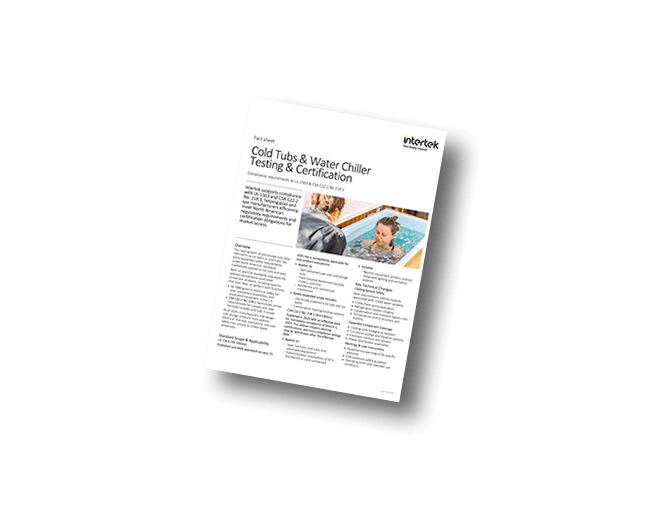
Cold Tub & Water Chiller Testing and Certification | Fact Sheet
Intertek helps pool and spa manufacturers achieve compliance with UL 1563 and CSA C22.2 No. 218.1, enabling efficient fulfillment of North American regulatory and certification requirements for market access.
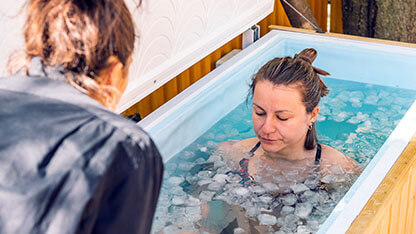
29 Apr 2026
Understanding Compliance Requirements for Cold Plunge Tubs
What Manufacturers Need to Know about Recent Standards Updates
Knowledge Center
Transitioning Products and Certification to UL 60335-2-89
NSF 456 Vaccine Storage Fact Sheet
Germicidal Efficacy Testing: Appliance Considerations
Germicidal Products: Safety, Performance, and Efficacy
IEC 62368-1 Standard Compliance Guide White Paper
Product Listing & Marking Strategies White Paper
Household Dishwasher Test Method EN 50242:2016 Fact Sheet
Gas Appliance Regulations: Guidance for Implementation of GAR vs. GAD White Paper
Flammable Refrigerants: Comprehensive Assurance Fact Sheet
Ceiling Fan Energy Efficiency: Compliance with DOE Rule 10 CFR Part 430
G Marking For Low-Voltage Electrical Products in the Middle East White Paper
Related Links
- Why Meeting Safety Standards can Still Result in Recalls
- Reese's Law – ANSI/UL 4200A-2023
- Product Directories
- Public Notices & Product Safety Alerts
- Smart Grid Services
- Transitioning Products and Certification to UL 60335-2-89
- IEC 60335-1 Edition 6 Fact Sheet
- Germicidal Efficacy Testing: Appliance Considerations
- NSF 456 Vaccine Storage Fact Sheet
- Cybersecurity for Consumer Products
- Intertek Performance Gateway
